
Nutrition
Nutrition is simpler than it sounds. It's the daily practice of fueling your body with foods that help it grow, recover, and feel good. For young people in particular, what you eat shapes how you think, sleep, move, manage emotions, and show up at school and at home.
Why nutrition matters for young people
Adolescence is the second-fastest growth period of your entire life. Your bones, muscles, and brain are still being built and they need a steady supply of protein, complex carbohydrates, healthy fats, vitamins, and minerals to do it well. The food choices you make in your teens and early twenties influence how well you focus in class, how stable your mood feels, how easily you fall asleep, and your risk of chronic illness decades from now.
Limited access to fresh food, tight family budgets, food insecurity, and being pulled between two food cultures can all make "eating well" feel out of reach. The goal here isn't a perfect diet. Instead, it's small, realistic shifts that work with your life, your culture, and your budget.
By the numbers
1 in 6
U.S. households with children faced food insecurity in 2023.
USDA
~25%
of teens get the recommended daily fruits and vegetables.
CDC
60%
of an adolescent's daily calories often come from ultra-processed foods.
AAP
8–10 hrs
of sleep teens need, heavily influenced by what (and when) they eat.
NIH
≈15%
of teen girls are iron-deficient, the most common nutrient gap.
CDC
2x
Teens who eat breakfast are twice as likely to focus in morning classes.
Harvard SPH
Nutrients teens commonly miss
Iron
Carries oxygen in your blood. Low iron causes tiredness and trouble focusing. Find it in beans, lentils, lean meat, spinach, and fortified cereals.
Calcium
Builds strong bones during your peak bone-growth years. Get it from dairy, fortified plant milks, leafy greens, and tofu.
Vitamin D
Helps your body absorb calcium and supports your mood. Comes from sunlight, eggs, fatty fish, and fortified foods.
Fiber
Keeps digestion healthy and helps you feel full. Found in whole grains, beans, fruits, and vegetables.
Protein
Builds muscle, hormones, and brain tissue. Eggs, beans, lentils, peanut butter, yogurt, chicken, fish, and tofu all count.
Omega-3 fats
Critical for brain development and mood. Find them in walnuts, flax and chia seeds, salmon, sardines, and canned tuna.
The balanced plate
A simple way to picture a meal: about half the plate vegetables and fruit, a quarter whole grains (rice, pasta, bread, tortillas), and a quarter protein (beans, fish, chicken, tofu, eggs). Add water on the side. Cultural foods absolutely count, in fact, most traditional meals are already built this way.
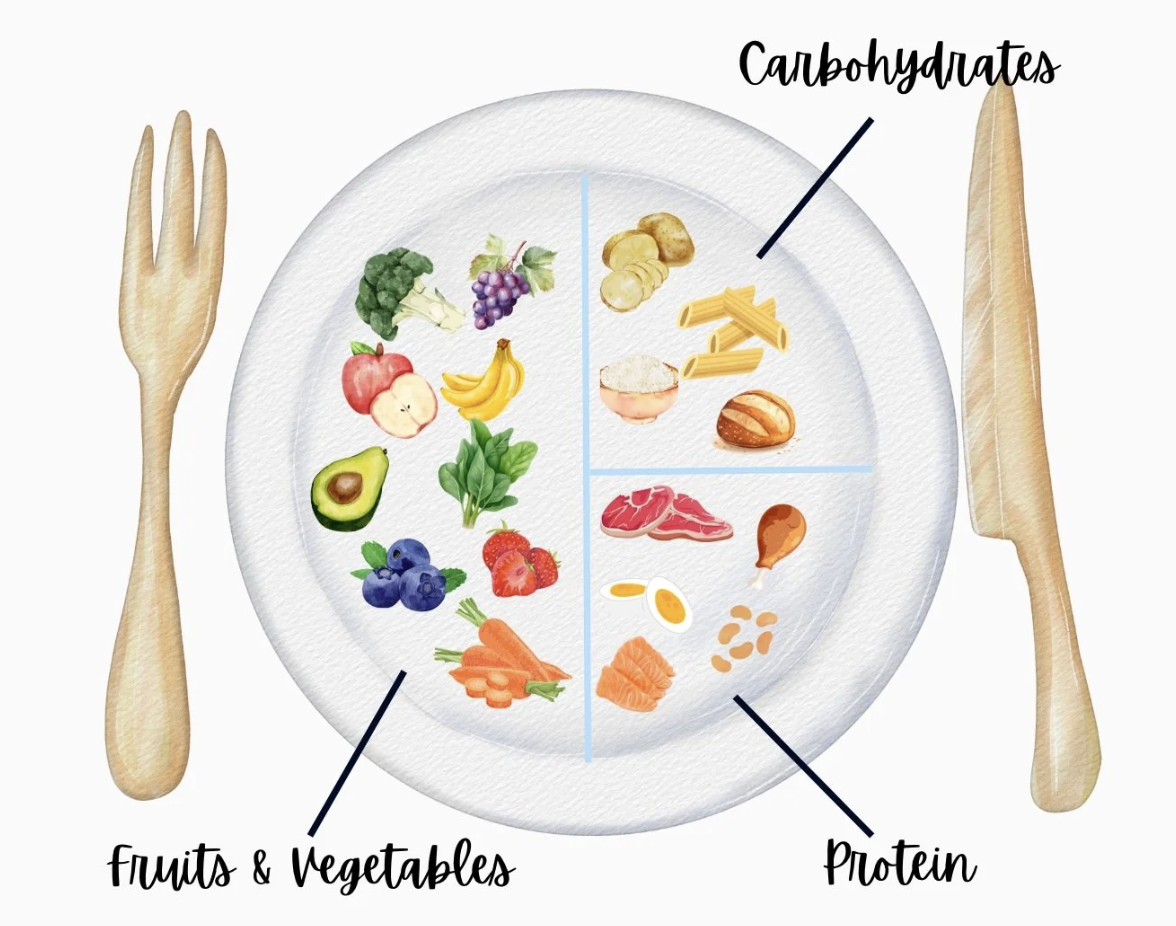
Examples that already balance
Rice and beans with sautéed greens. Lentil dal with whole-wheat roti and yogurt. A chicken-and-vegetable stir-fry over brown rice. Hummus, pita, cucumber, and tomato. Pozole with cabbage, radish, and lime.
Upgrades that take 30 seconds
Swap white bread for whole-grain. Add a handful of spinach to scrambled eggs. Toss frozen vegetables into instant noodles. Replace soda with sparkling water and lemon. Top cereal with peanut butter or seeds for staying power.
For visual references in multiple languages, see myplate.gov.
Mindful eating
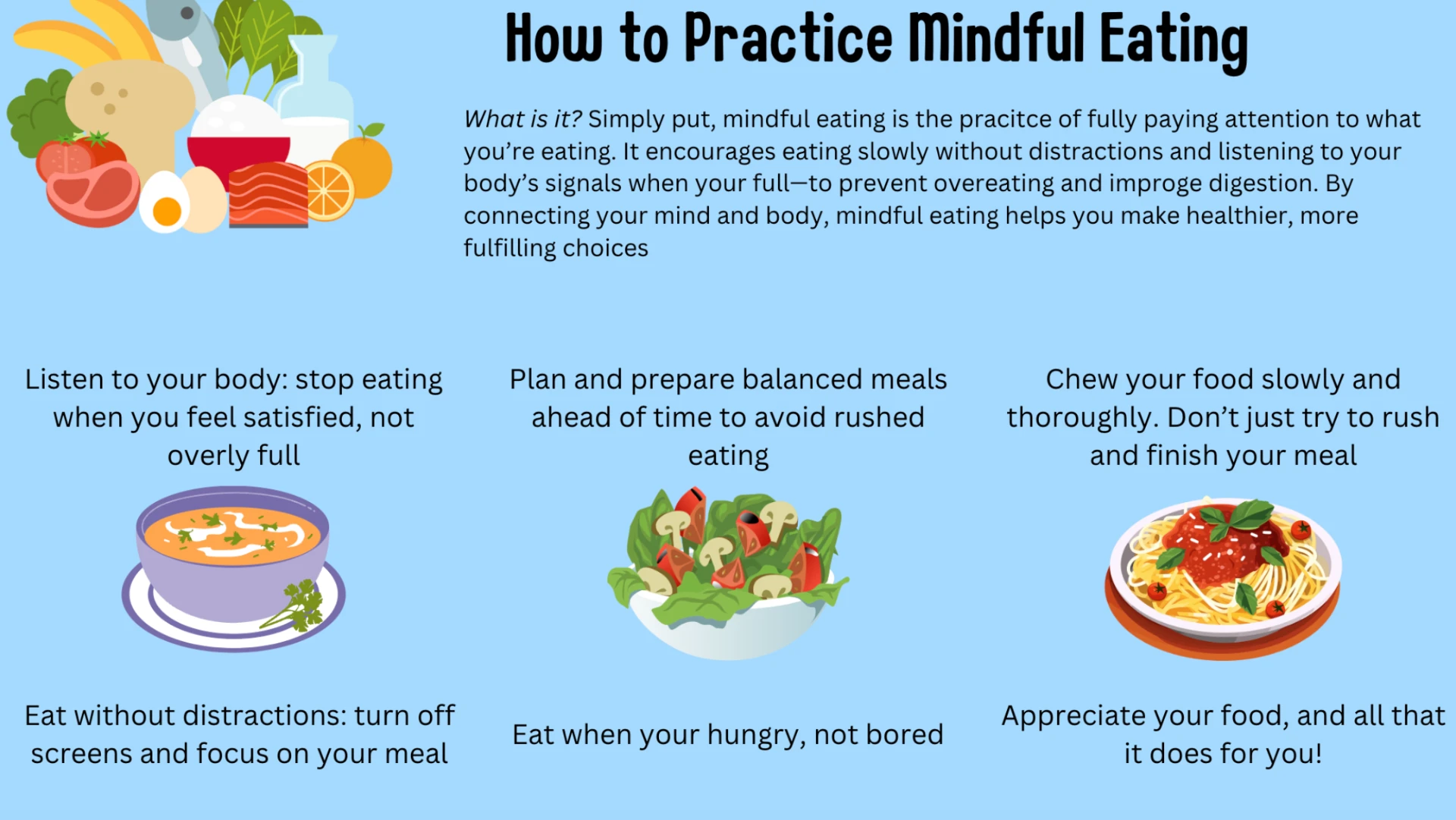
Mindful eating means paying attention to what you're eating, how it tastes, and how it makes you feel. It can help you enjoy food more, notice hunger and fullness cues, and avoid overeating without strict rules.
Easy healthy recipes
Cooking at home doesn't have to be expensive or time-consuming. These free recipe collections focus on simple, budget-friendly meals that use whole ingredients and can be adapted to many cultural tastes.
MyPlate Kitchen
Hundreds of free, budget-friendly recipes from the USDA. Filter by meal, cost, and cuisine.
View recipes ↗Budget Bytes
Simple recipes built around low-cost ingredients, with step-by-step photos and meal prep tips.
View recipes ↗SNAP-Ed Recipes
Nutritionist-reviewed recipes designed for tight budgets and available in English and Spanish.
View recipes ↗African & Caribbean Dishes
Heart-healthy versions of traditional African, Caribbean, and soul-food recipes.
View recipes ↗Vegetarian Family Meals
Meatless recipes that use beans, lentils, eggs, and tofu as affordable protein sources.
View recipes ↗Eating well on a budget
Buy beans and lentils dry
A $2 bag of dried beans makes 6–8 servings of protein, cheaper than almost any meat.
Frozen is just as nutritious
Frozen fruit and vegetables are picked at peak ripeness, cost less, and don't go bad in a week.
Cook once, eat three times
A pot of rice, beans, or soup on Sunday becomes lunch Monday, Tuesday, and Wednesday.
Use SNAP / EBT and school meals
Free and reduced-price school breakfast, lunch, and summer meal programs exist for a reason. They're yours to use.
Shop the edges of the store
Produce, dairy, and bulk grains tend to live on the perimeter. The center aisles are mostly ultra-processed.
Honoring your culture
There is no single "healthy" cuisine. Traditional Mexican, Salvadoran, Syrian, Afghan, Somali, Vietnamese, and Caribbean meals are typically built around vegetables, legumes, whole grains, and modest portions of meat, exactly what nutrition science recommends. You don't need to abandon your family's cooking to be healthy. The goal is to lean into the most nourishing version of the foods you already love.
"You can't pour from an empty cup, and you can't learn, lead, or grow from an empty stomach."
Habits that stick
Eat breakfast
Even something small, yogurt, fruit, toast with peanut butter, helps you focus all morning.
Drink water
Carry a water bottle. Aim for 6–8 cups a day. Thirst often feels like tiredness.
Limit sugary drinks
Soda and energy drinks spike and crash your energy. Try sparkling water with lime or unsweetened tea.
Don't skip meals
Skipping leads to overeating later and makes mood swings worse. Three meals + snacks is normal.
Eat with people when you can
Family or shared meals are linked to lower rates of disordered eating and better mental health.
Notice how food makes you feel
Energized after lunch? Sluggish after a soda? Your body is the most honest data source you have.
When to talk to a professional
If you're skipping meals to control your weight, feeling out of control around food, using food to cope with hard feelings, or feeling unwell after most meals, those are signals worth taking seriously. A school nurse, doctor, or counselor can help. The National Alliance for Eating Disorders also runs a free helpline.
- MyPlate ↗
Free meal planning tools and printable resources in English and Spanish.
- USDA SNAP-Ed ↗
Recipes and shopping tips designed around tight grocery budgets.
- National Alliance for Eating Disorders ↗
Free, confidential helpline and therapist referrals for disordered eating.
- Feeding America Food Bank Finder ↗
Locate a free local food bank in your zip code.
Bingo Challenge!!
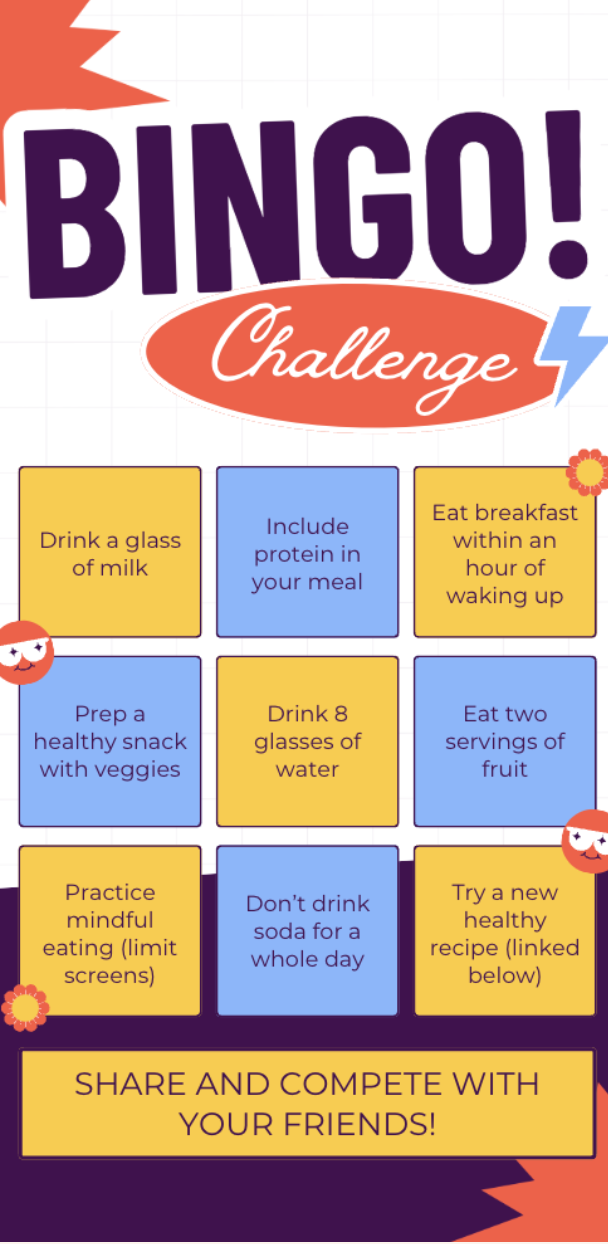
Now that you've learned some helpful nutrition tips, try this bingo challenge. Share and compete with your friends, see who knows the most about healthy eating and drinking habits. Mark off squares as you try each new challenge, like drinking 8 glasses of water, or prepping a healthy snack with veggies. Who will be the first to get BINGO?